Patent Pending · Four USPTO Provisional Applications On File

BUOYANCYDRIVEENGINE

Zero fuel. Zero emissions. Zero exhaust. Firm baseload power from physics — confirmed across 39 documented prototype test runs. Built in Ocoee, Florida. Patent pending. University research partner engaged.
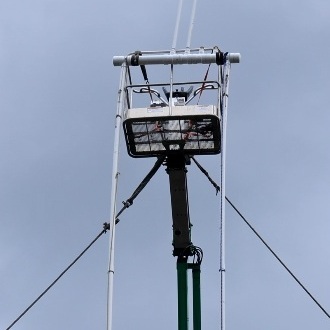
BDE prototype header assembly — top of 50-foot test system
Header Assembly — Top of 50-ft Prototype
Stand pipes visible. Airlift column left — air exits through stand pipes. In full-scale system, exhaust air is dewatered and returned to compressor. Right pipe: downflow — Force 2.
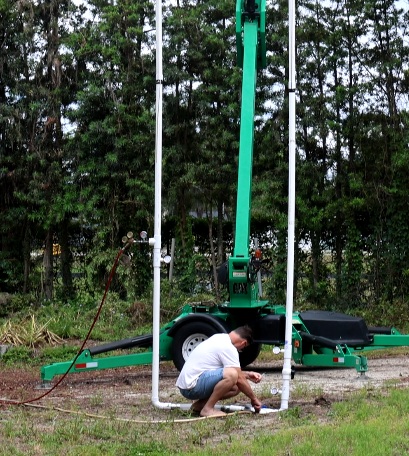
BDE prototype base — Marty Hunt — Ocoee Florida
Base of 50-ft Prototype — Ocoee, Florida
Inventor Marty Hunt at the inlet and air injection point. System standing at full 50-foot test height.
43–51% Above Published Literature Maximum
39 Documented Test Runs
Zero Fuel Cost — Ever
USPTO Patent Pending
EMP Hardened by Design
186 MPH Hurricane Resistant
100% American Made
43–51% Above Published Literature Maximum
39 Documented Test Runs
Zero Fuel Cost — Ever
USPTO Patent Pending
EMP Hardened by Design
186 MPH Hurricane Resistant
100% American Made
Prototype Confirmed Results
43–51
Percent
Above published scientific literature maximum — every single run
39
Test Runs
Documented across multiple independent test sessions — third party video recorded
125.9
Megawatts
Net output per 13-system station — continuous — 24 hours — 365 days — weather independent
6
Months
First station operational — modular kit construction — factory X-ray verified
The Physics
Four Forces.
One System.
1
Present in all airlift systems
Airlift Buoyancy
Rising bubbles displace water upward. The baseline force present in all airlift systems since 1797. The BDE starts here and goes further.
2
⚡ Core Invention — Absent from all prior art
Pressure Differential Drive
The sealed return column contains pure water — the heaviest possible fluid. The upflow column contains an air-water mixture — lighter than pure water. This creates a persistent pressure differential that drives continuous circulation. Directly measured in prototype. Not in any published literature. This is the invention.
3
Captured — not wasted
Bubble Expansion Work
As bubbles rise, pressure drops and they expand according to Boyle's Law. Open loop systems lose this energy at discharge. The sealed BDE loop captures every bit of expansion work and converts it to flow. Prototype pressure reached 0 PSI at 15 feet — transitioning to negative range above that point.
4
Full scale design
Coriolis Effect
The full scale 1,872-foot counterclockwise helical penstock harvests Earth's rotation momentum — adding net directional force to flow. Physics working for free at planetary scale.
The Data
Prototype Confirmed.
ParameterOpen Loop MaxBDE Measured
Peak Flow Rate98 GPM131 GPM
Mix Velocity13.1 ft/s19.83 ft/s
Void Fraction15–20%5.1%
Air Input~3.0 SCFM~1.0 SCFM
Driving Forces14
Under LoadStalls85 GPM at 3/4 closed
Extra Energy Under LoadRequires moreNone — same 18 PSI
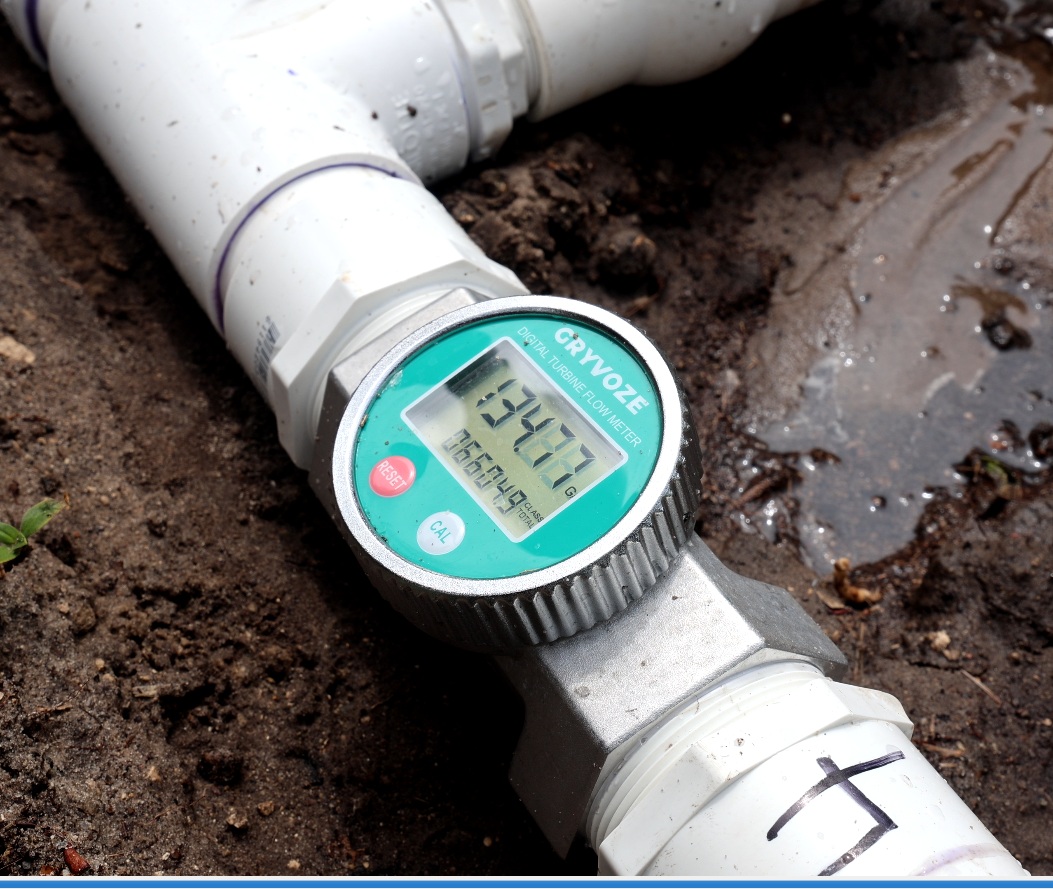
Gryvoze digital turbine flow meter reading 135 GPM — BDE prototype test run 2
135 GPM Flow meter on ground — end of Test Run 2. Gryvoze digital turbine flow meter. Calibrated instrumentation. This is the actual reading — not a projection.
A smaller pipe. One third the air. Fifty percent above the maximum.
The BDE prototype used a 1.692-inch ID pipe — smaller than the 1.75-inch comparison. Using one third the air input. At one quarter the void fraction. And produced flow velocities 43 to 51 percent above the published scientific literature maximum — across 39 consecutive documented runs on a rebuilt system.
Four USPTO provisional patent applications on file. CFD modeling and full scale validation in progress. Third party video recorded.
USPTO 64/035,998 USPTO 64/036,527 3rd Party Video 39 Documented Runs
National Security
Built for the Real World.
EMP Hardened
Faraday cage construction to MIL-STD-188-125. No solid state components in the fluid system. Operates through any EMP event by design — not by addition of protective systems.
🌀
Hurricane Resistant
ASCE 7 Risk Category IV — 186 mph wind rating. Reinforced concrete construction. No exterior windows. No exposed rooftop equipment. Operates through Category 5.
🔒
Zero Supply Chain Risk
No fuel. No imports. No foreign dependency. The only input is compressed air from American-made compressors. Cannot be disrupted by any adversary action — ever.
🗺️
Grid Partnership
Designed to site at or adjacent to major grid transfer stations. Distributed generation hardening the grid at its most critical nodes against weather, attack, and cascading failure.
Full Scale Design
The Numbers At Scale.
Net Output Per Station
125.9 MW
Continuous — 24/7 — weather independent
Installed Cost Per Kilowatt
$5,876
vs $6,000–10,000/kW for nuclear
First Station Operational
6 Months
vs 15 years for nuclear
Fuel Cost
Zero
Forever — that is what lowers electric bills permanently
Airlift Pipes Per System
271
4-inch OD — hexagonal close-pack — 325-foot column
Annual Revenue Per Station
$125.7M
At $0.14/kWh — 95% capacity factor
System Enhancement
Secondary Air Injection — The Venturi Advantage.
V
Venturi Secondary Injection
At approximately 70 feet depth, the high velocity upflow — estimated at 30 to 35 feet per second at full scale — creates a low pressure zone at a Venturi throat. That pressure drop draws additional air down from the header chamber and into the airlift column with zero additional compressor energy. More air means more void. More void means stronger Force 2 pressure differential. Stronger Force 2 means faster flow. Faster flow means a stronger Venturi effect — a self-reinforcing cycle that amplifies system output without any additional input.
F
Estimated Additional Upflow Force
Across 271 airlift pipes at full scale, a 70-foot void of air displacing water creates an estimated 164 tons of additional downflow driving force — at zero additional energy input. That force drives water harder past the inline turbines, increasing power output beyond the baseline 125.9 MW estimate. All figures are engineering estimates pending CFD validation.
M
Micro Bubble Self-Optimization
In prototype testing, the system's inlet pressure dropped from 18 PSI to 11 PSI over 45 minutes of continuous operation — while maintaining equivalent flow rate. No adjustments were made. The system found a more efficient equilibrium on its own. Dissolved air releasing as micro bubbles, compressing in the downflow and re-expanding in the upflow, contributes additional void fraction without additional compressor input. The system gets more efficient the longer it runs.
C
Compressor Load Reduction
As the Venturi draws additional air into the upper column, the void fraction above the injection point increases — reducing the effective back pressure the compressor works against. The compressor does less work as the system produces more power. Net efficiency gain on both ends simultaneously.
Where It Can Be Built
Deployment Anywhere.
Utility Substations
The primary deployment model. A 150 by 160 foot footprint at or adjacent to existing grid transfer stations. Power where it is needed, eliminating long transmission runs and grid vulnerability at the most critical nodes.
Municipal Water Tower Retrofit
Existing elevated water towers repurposed as BDE power generation units. The existing tank becomes the header chamber. The helical penstock wraps the existing tower legs. A municipal liability becomes a community power asset — at a fraction of new construction cost. Ideal for small towns and rural communities.
Remote and Off-Grid Communities
Alaska villages, mountain communities, and remote locations currently dependent on diesel generation flown or shipped in at enormous cost. No fuel supply chain. No import dependency. Zero fuel cost from day one — permanently replacing the most expensive power on earth with the least expensive.
Island Nations and Developing Communities
Prefabricated deployable BDE units manufactured, shipped, and installed as complete standalone systems. No existing infrastructure required. Provides simultaneous power generation and elevated water storage. Island nations currently paying $0.50 to $1.00 per kilowatt hour for diesel power receive permanent zero-fuel baseload generation.
Mountain and Cliff Face Installations
Natural vertical elevation replaces engineered structure. The airlift column runs straight up the rock face. The downflow return runs at any angle back to the base with a single 27-foot radius turn. No building required where nature provides the height.
Data Centers and Industrial Facilities
On-site baseload power for facilities with constant high demand. Zero fuel cost, zero emissions, zero grid dependency. A BDE at a data center or steel mill eliminates the single largest operating cost — energy — permanently.
100% American.
No Exceptions.
Every component manufactured in America from American materials by American workers. No rare earth minerals. All parts sourced in the USA. No foreign fuel imports. Every dollar stays in America and creates American jobs.
American Steel Mills
American Pipe Manufacturers
American Machine Shops
American Compressor Manufacturers
American Electrical Systems
No Rare Earth Minerals
No Foreign Supply Chain
No Fuel Imports — Ever
Current Status
Where We Stand.
USPTO Provisional Patent Applications Filed
Four provisional applications on file — April through August 2026 — Utility deadline April 10, 2027
Confirmed
39 Documented Prototype Test Runs
Multiple independent test sessions — calibrated instrumentation — third party video — all results confirmed
Confirmed
CEBA Membership — Clean Energy Buyers Association
380+ member companies including Microsoft, Google, Amazon — energy procurement community engaged
Active
Defense Innovation Unit — Solution Brief Submitted
DoD installation energy resilience — EMP hardened zero fuel baseload power
Submitted
Nature's Energy Systems LLC — Formed
Florida LLC formed June 2026 — naturesenergysystems.com
Confirmed
CFD Modeling
Computational fluid dynamics validation of full scale output projections — modeler engaged — in progress
In Progress
Get In Touch
Ready to Talk.
All data and full technical documentation — including prototype test runs, pressure profile analysis, performance comparison charts, BDE versus open loop comparison data, concept paper, and patent documentation — available immediately upon request.
Inventor
Marty Hunt
Company
Nature's Energy Systems
Location
Ocoee, Florida
Request Full Documentation